No, the Easter Bunny is not Pagan, it isn't Even Really a Bunny.
The Easter Bunny didn’t come from pagan fertility cults—it hopped in from medieval Christian art and German Protestant folklore. Time to stop embarrassing yourself with pastel pagan memes.

Table of Contents
- Executive Summary
- First Problem: You’re Thinking of the Wrong Animal
- What a Hare Actually Is
- The Animal in Its Original Setting
- The Linguistic Trail: Osterhase
- The Economic Trail: The Hare as Currency
- So Why a Hare at All?
- The “Eostre” Gap
- When the Hare Met the Goddess: A Modern Construction
- What Happened in America
- The Collapse of the Distinction
- How the Meaning Got Rewritten
- The Symbolic Swap: Hare vs. Bunny
- The Direction of the Error
- Why the Fertility Myth Persists
- The Modern Bunny: From Folklore to Commodity
- Key Takeaways
- FAQ
- Footnotes
- Works Cited
Executive Summary
Most debates about the “pagan” origins of Easter fail at the starting line. The problem is not simply misinterpretation—it is misidentification. The modern discussion begins with the wrong animal.
What people imagine today—a soft, domesticated rabbit—is not the animal that appears in the historical record. The original figure is the European hare (Osterhase), a very different creature with very different symbolic associations.
Once that substitution is corrected, the familiar “fertility symbol” explanation begins to unravel. The modern narrative is not the recovery of an ancient tradition—it is the result of projecting contemporary assumptions onto a transformed symbol.
This is not an isolated mistake. It follows a broader pattern of back-projection and superficial comparison seen in many popular “copycat” claims. For a wider look at that pattern, see Parallelism: Because Apparently Everything Is a Copy of Something Older.
First Problem: You’re Thinking of the Wrong Animal
Before discussing paganism, fertility rites, or Christian symbolism, a more basic error must be addressed.
Most people are picturing the wrong animal.
The modern “Easter Bunny” evokes a small, docile rabbit—the kind found in pet stores, cartoons, and children’s books. That image feels so natural that it is projected backward into history.
It should not be.
The historical and linguistic record does not point to a rabbit. It points to a hare.
What a Hare Actually Is
In modern English usage—especially in American English—“hare” is often treated as a formal or archaic synonym for “rabbit.” This is incorrect. They are distinct animals with different ecological and behavioral profiles.
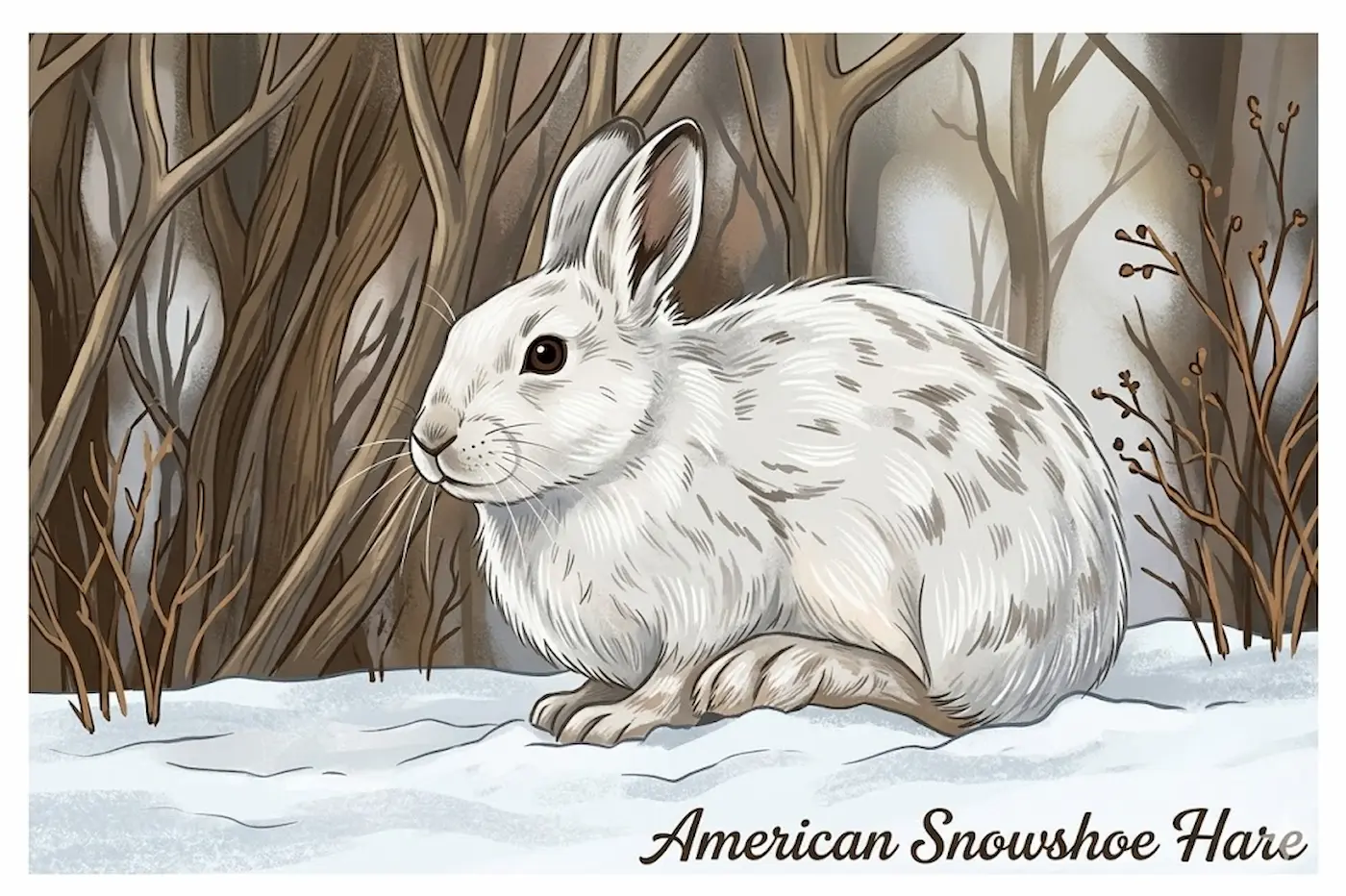
Hares are larger, longer-legged, solitary, and live above ground. They are fast, visible, and active in open landscapes.
Rabbits are smaller, burrow-dwelling, and often social. They occupy a different ecological niche and are less visible in open terrain.
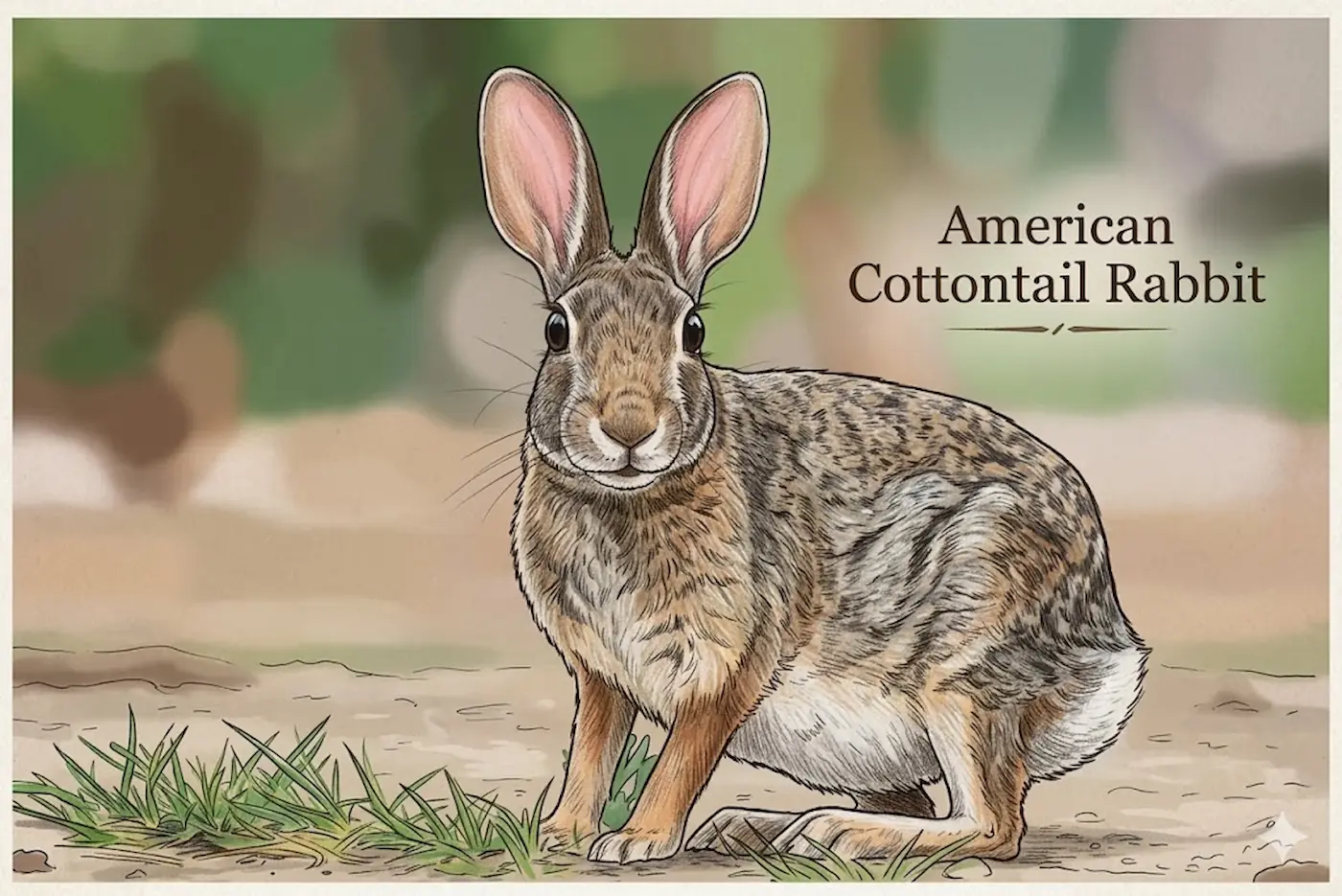
This distinction matters because symbolic meaning is not assigned in a vacuum—it emerges from how an animal is encountered in the environment.
And the animal that appears in early European tradition is the hare.
The Animal in Its Original Setting
The specific animal associated with early Easter tradition is the European hare (Lepus europaeus).
In the spring, hares are highly visible. They chase, leap, and engage in striking behaviors such as “boxing” in open fields. These displays made them a conspicuous part of the seasonal landscape.
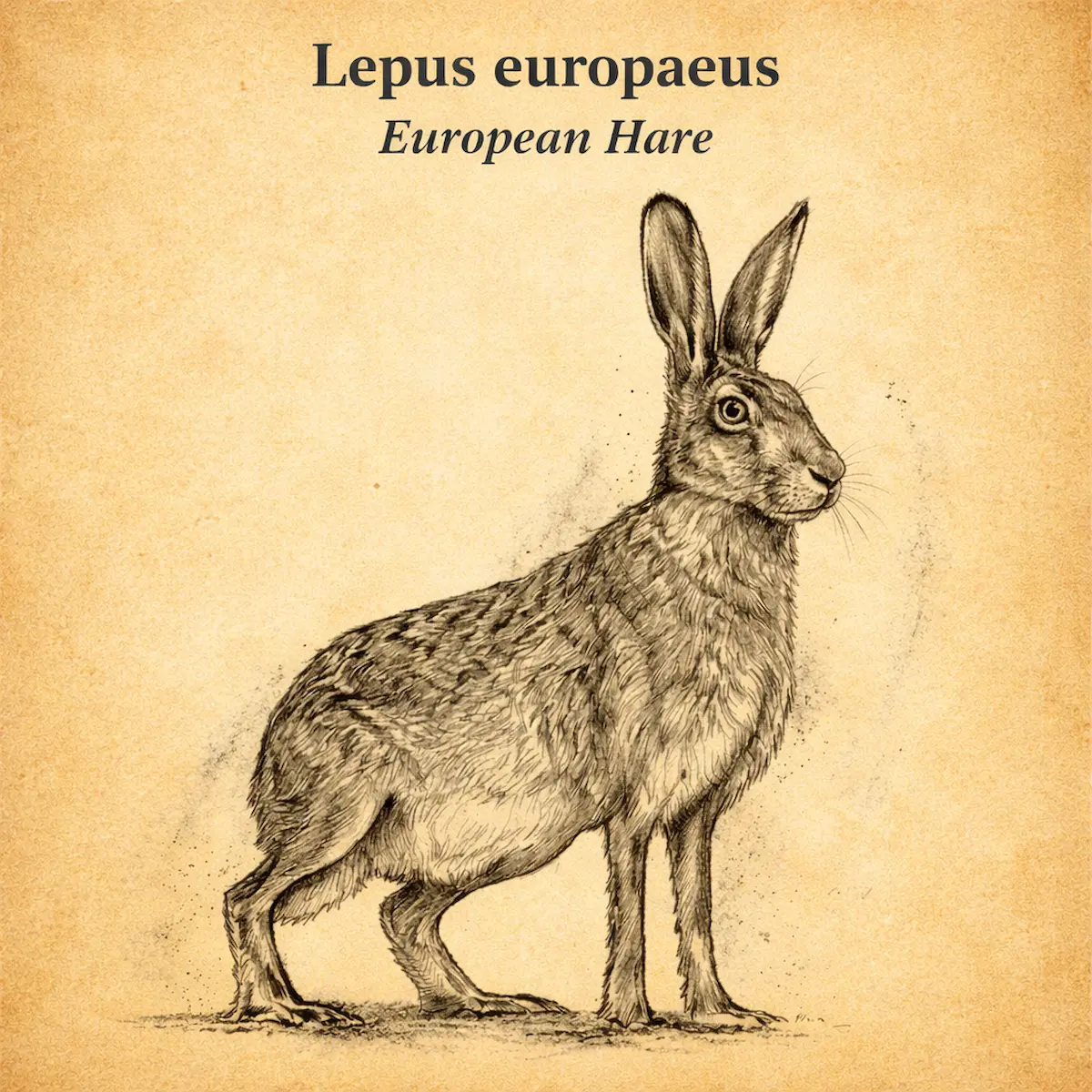
They were not hidden animals. They were seen.
Rabbits, by contrast, were less symbolically prominent in that environment.
Before symbolism even enters the discussion, the baseline is clear:
The culturally visible spring animal in Europe was the hare—not the rabbit.
The Linguistic Trail: Osterhase
The terminology confirms the identification.
The Easter figure originates in German as Osterhase:
Hase = hare
Kaninchen = rabbit
There is no ambiguity in the original terminology. The tradition refers specifically to a hare.
Once that term shifts, the meaning shifts with it.
The Economic Trail: The Hare as Currency
Before turning to mythology, there is a more grounded layer of evidence that is often overlooked: the economic and legal context of Easter in medieval and early modern Europe.
Easter was not only a religious holiday—it was also a calendar anchor for obligations. Rents, dues, and tithes were frequently scheduled around major feast days, including Easter.
In some regions, these payments were made not only in coin but in goods:
eggs
livestock
and in certain cases, hares
These were forms of in-kind payments, where debts were settled with tangible goods rather than currency.
This matters because it provides a material context in which hares and eggs were already linked to the Easter season—not as symbols, but as seasonal commodities tied to obligation and exchange.
The hare, highly visible in spring and available as game, fits naturally into this system. Eggs, likewise, were abundant and seasonally appropriate.
This does not explain the full development of the Easter hare tradition, but it grounds it in lived practice:
Before the hare becomes a symbolic figure, it is part of the economic rhythm of the season.
So Why a Hare at All?
If the hare is not a pagan fertility symbol, the obvious question remains:
Why does it appear in the Easter tradition in the first place?
The answer is more modest—and more historically grounded.
The Easter hare emerges not from ancient mythology, but from early modern German folk practice.
By the 17th and 18th centuries, sources describe a custom in which a hare would lay eggs for children to find at Easter. This is the origin of the Osterhase as a gift-bringing figure.
This places the tradition firmly in the early modern period, not in pre-Christian antiquity.
There is no clear evidence explaining why the hare was chosen for this role. However, several grounded factors likely contributed:
- The hare was a highly visible animal in the European spring landscape
- It was already culturally familiar and symbolically flexible
- It had existing associations in medieval thought, including ideas of unusual reproduction and vigilance
What matters is what we do not see:
- No early source linking the hare to Eostre
- No evidence of a continuous pagan ritual involving the animal
- No indication that the hare functioned as a fertility emblem in the way modern narratives claim
The hare enters the Easter tradition as part of a regional folk custom, not as a surviving fragment of a pagan cult.
The “Eostre” Gap
A common claim is that the Easter animal originates from a pagan fertility goddess named Eostre.
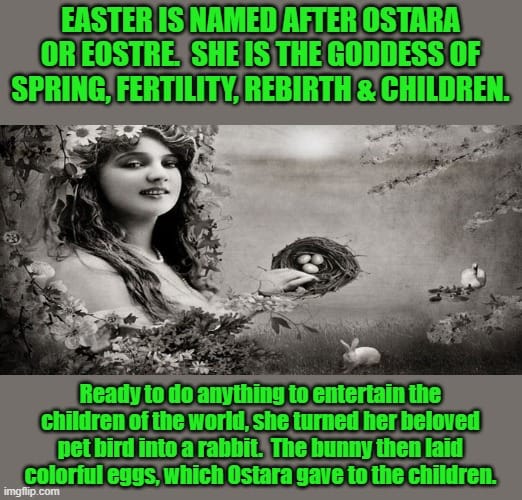
The evidence does not support this.
The only historical reference to Eostre comes from the 8th-century monk Bede, who notes that a spring month (Eosturmonath) was named after a goddess.¹
He does not mention:
- a hare
- eggs
- rituals
- fertility symbolism
For over a thousand years, this is the entirety of the evidence.
The conclusion is unavoidable: the goddess and the animal are not originally connected. Any linkage between them is inferential, not historical.
When the Hare Met the Goddess: A Modern Construction
The connection between Eostre and the hare emerges much later—and it begins as speculation.
In the 19th century, Jacob Grimm revisited Bede’s reference and suggested that Eostre might reflect a broader Germanic tradition.²
In 1874, Adolf Holtzmann extended this speculation, proposing that the Easter hare may have been associated with a reconstructed Germanic goddess often called Ostara.³
Crucially, Holtzmann did not present evidence. He suggested that the hare was “probably” sacred to the goddess.
That single word—“probably”—marks the origin of the claim.
What follows is a familiar pattern:
- A speculative connection is proposed
- The uncertainty is gradually dropped
- The claim hardens into assumed fact
Holtzmann was not preserving a tradition. He was synthesizing one—combining:
- a reconstructed goddess based on minimal evidence
- an existing folk custom (the Easter hare)
Later writers expanded the idea further, inventing explanatory myths such as a bird transformed into a hare that lays eggs.
None of this appears in early sources.
What is often presented as ancient tradition is, in reality, a retroactive construction.
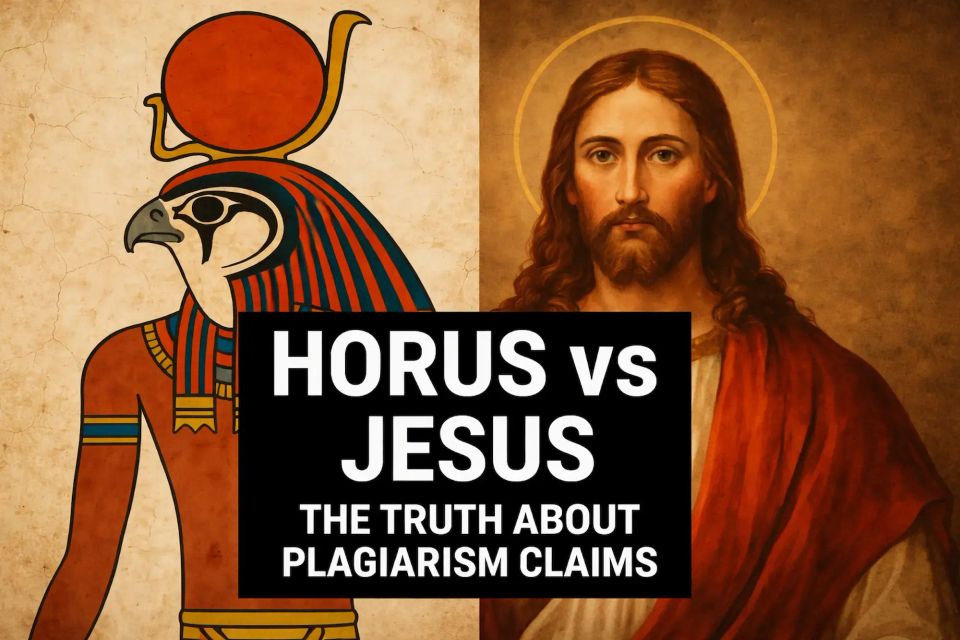
If that pattern sounds familiar, it should. The same genre of claim turns up in recycled comparisons between Jesus and older figures such as Horus; see Jesus–Horus Myth, Debunked.
What Happened in America
The shift from hare to rabbit has a different origin entirely.
When German immigrants brought the Osterhase tradition to North America in the 18th century, they brought the hare as part of that tradition.
But the environment had changed.
Hares in North America are relatively elusive and regionally limited. They are not commonly encountered in settled areas.
Cottontail rabbits are.
They are visible in gardens, fields, and neighborhoods. They are familiar.
The substitution follows a clear ecological and cultural logic:
- The hare existed, but was rarely seen
- The rabbit was common and visible
So the rabbit replaced the hare—not through theology, but through environmental familiarity and cultural adaptation.
The Collapse of the Distinction
Once the substitution took hold, the distinction faded.
American English did not preserve the same lexical clarity as German:
- “Hare” became less common
- “Rabbit” became the default
- “Bunny” emerged as a colloquial form
At that point, the original reference—the hare—was effectively erased from public awareness.
Change the animal, and the symbolic framework changes with it.
How the Meaning Got Rewritten
Once the rabbit replaces the hare, the reasoning follows a predictable path:
- Rabbits reproduce quickly
- Therefore, rabbits symbolize fertility
- Easter occurs in spring
- Therefore, the Easter animal must be a fertility symbol
The logic appears coherent—but only if the modern rabbit is projected backward into a tradition that originally centered on a different animal.
This is not continuity. It is back-projection.
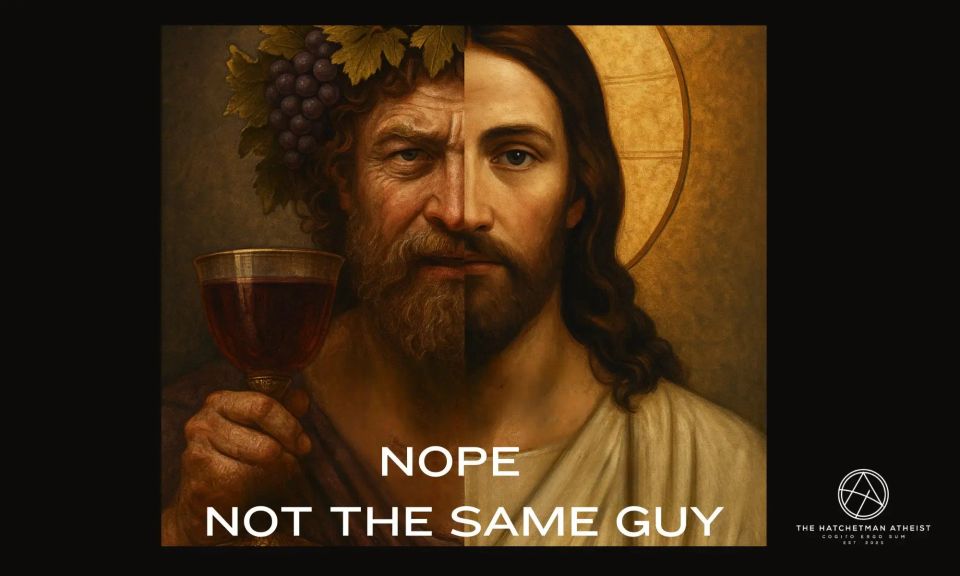
That same habit of reading later meanings back into earlier material also drives the persistent Jesus–Dionysus comparison; see Dionysus vs. Jesus: Myth.
---The Symbolic Swap: Hare vs. Bunny
What the Hare Meant
In medieval Europe, the hare was associated with ideas that do not align with modern assumptions.
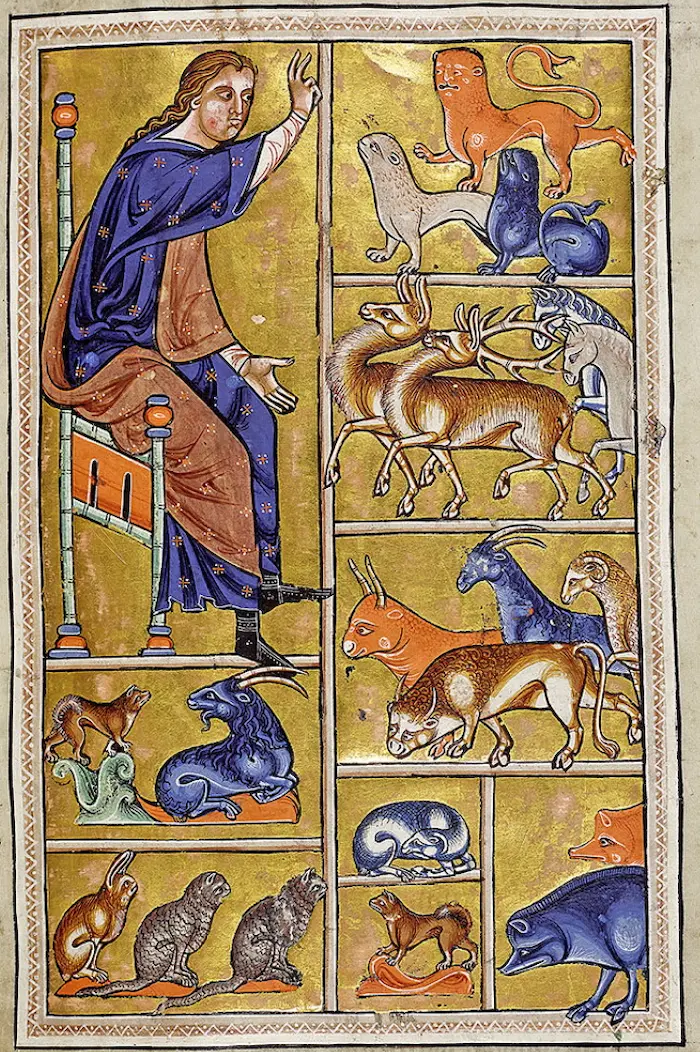
Bestiaries describe the belief that hares could reproduce without mating, sometimes portraying them as self-fertilizing hermaphrodites.⁴
This made the hare symbolically compatible with themes of virgin birth, particularly in connection with Mary.
Rather than representing uncontrolled fertility, the hare could represent reproduction without sexual intercourse.
The hare was also associated with vigilance. Ancient sources describe it as sleeping with its eyes open,⁵ linking it to watchfulness.
The “three hares” motif, found in medieval churches and across Eurasia, has been interpreted in some contexts as symbolic of the Trinity.⁶
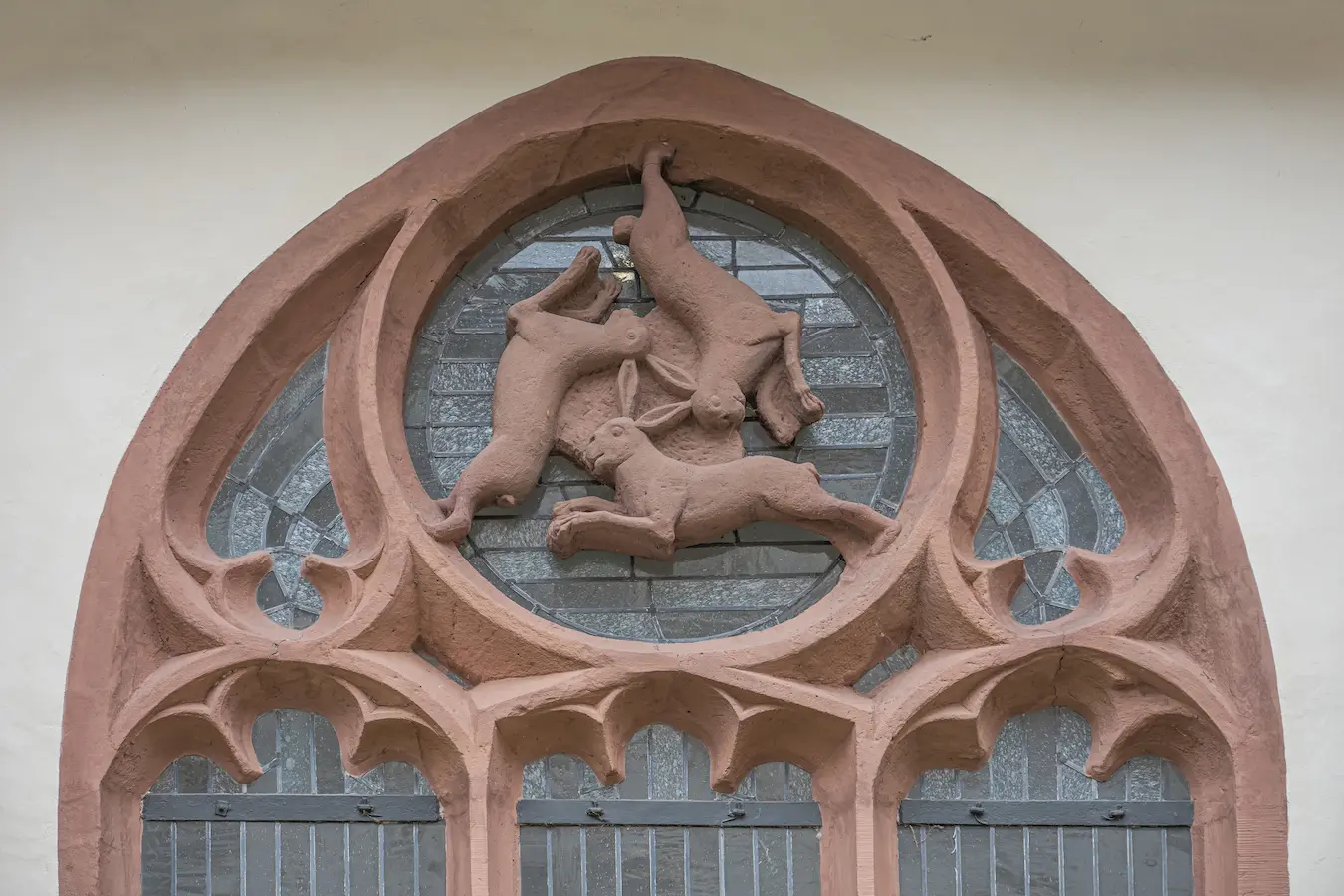
The symbolism is layered and complex. It is not reducible to fertility.
What the Rabbit Suggests
The modern rabbit carries a different symbolic load:
- domestication
- familiarity
- rapid reproduction
The phrase “breeding like rabbits” captures the association.
From there, the fertility narrative becomes almost inevitable—but only because the animal has already been replaced.
The key point is structural:
The fertility interpretation depends entirely on the substitution of the rabbit for the hare.
The Direction of the Error
The error follows a consistent pattern.
Instead of asking what the symbol meant in its original context, the argument begins with what it means now and works backward.
Once that reversal occurs, the conclusion appears obvious.
But obviousness is not evidence.
The problem is methodological: people often mistake intuitive pattern recognition for historical proof. For a sharper illustration of that habit, see The Horse’s Teeth Parable: Empiricism and Attribution.
---Why the Fertility Myth Persists
The fertility explanation persists because it feels intuitive.
Given the modern rabbit, the conclusion seems self-evident.
But that intuition rests on a prior mistake.
Restore the original animal, and the logic collapses.
The mechanism is the same in other resurrection-copycat arguments as well, where loose resemblance gets inflated into historical dependence; see Attis Resurrection Myth, Debunked.
---The Modern Bunny: From Folklore to Commodity
In America, the conflation of hare and rabbit produced the Easter bunny—a figure that was then amplified through commercial culture.
Advertising and consumer products reinforced the rabbit image, exporting it globally and solidifying the misidentification.
What began as a localized ecological substitution became a standardized cultural icon.
Once a simplified image becomes culturally dominant, people start inventing ancient pedigrees for it after the fact—the same problem that shows up in popular Jesus–Krishna comparisons; see Jesus vs. Krishna Myth, Debunked.
---Key Takeaways
- The original Easter animal was the hare (Osterhase), not the rabbit
- The hare and the goddess Eostre were not originally connected
- The connection emerges in the 19th century as speculation
- The rabbit replaces the hare in America due to environmental visibility and cultural adaptation
- The modern fertility narrative depends on projecting contemporary assumptions backward
- Change the animal, and the entire explanation changes with it
FAQ
Did the Easter Bunny come from pagan fertility rituals?
There is no early evidence linking the Easter animal to pagan fertility rites. The connection is a later interpretation.
What is the Osterhase?
The Osterhase is the German “Easter Hare,” the original form of the Easter animal.
Was the Easter Bunny originally a hare?
Yes. The earliest traditions refer specifically to a hare.
Related reading:
If you are interested in how seasonal myths get retrofitted onto Christian holidays, the same problem appears in claims about Christmas and pagan origins. See The Origins of Christmas: December 25 Was Not Pagan.
Footnotes
¹ Bede, The Reckoning of Time.
² Grimm, Jacob. Deutsche Mythologie.
³ Holtzmann, Adolf. Deutsche Mythologie. 1874.
⁴ The Aberdeen Bestiary, MS 24, Folio 13r.
⁵ Pliny the Elder, Natural History.
⁶ Breeze, Andrew. “The Three Hares.”
Works Cited
The Aberdeen Bestiary. University of Aberdeen, MS 24, c. 1200, Folio 13r.
Bede, The Venerable. The Reckoning of Time. Translated by Faith Wallis, Liverpool UP, 1999.
Breeze, Andrew. “The Three Hares.” The Journal of the Devonshire Association, vol. 130, 1998, pp. 241–245.
Grimm, Jacob. Deutsche Mythologie. Translated by James Steven Stallybrass, Dover Publications, 2004.
Holtzmann, Adolf. Deutsche Mythologie. 1874.
Hutton, Ronald. The Stations of the Sun: A History of the Ritual Year in Britain. Oxford UP, 1996.
Pliny the Elder. Natural History. Translated by H. Rackham, Harvard UP, 1938.
Image Licensing
All images used in this article are reproduced under their respective licenses. Attribution and licensing details are provided below:
[INSERT YOUR LICENSE SCREENSHOT IMAGES HERE IN ORDER]
Each image is used in accordance with its original license (Creative Commons, public domain, or equivalent). Source links and licensing metadata are preserved in the accompanying documentation.